Bespoke Suits in Jacksonville: What Actually Goes Into One
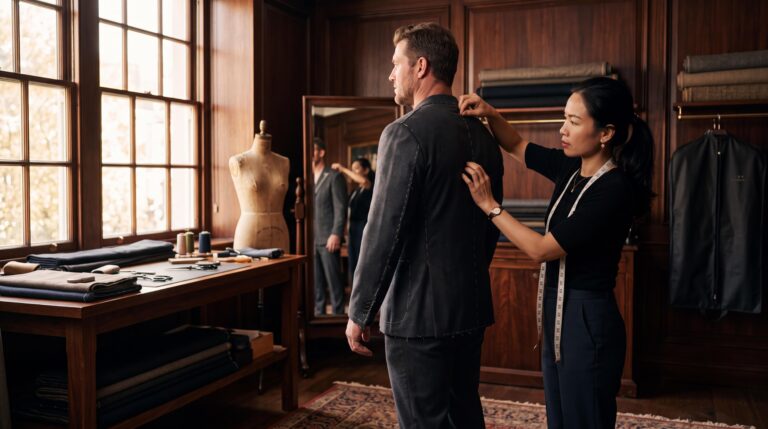
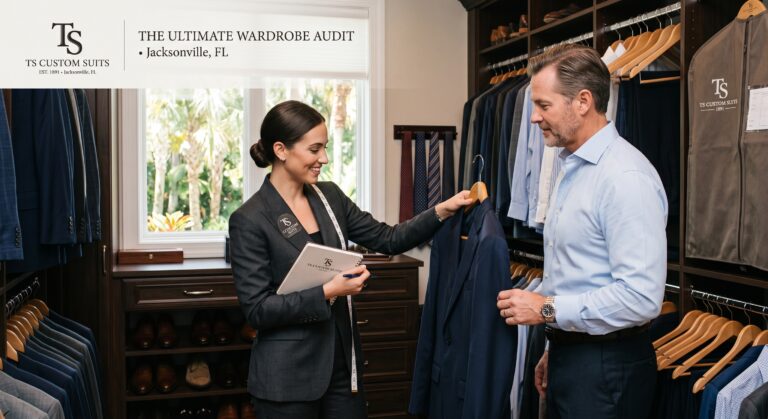
The first hour of a bespoke commission looks nothing like shopping for a suit. Nobody hands you a size. Nobody asks you to stand in front of a mirror and approve a jacket that was cut for a stranger. Instead, we watch how you stand, how you shift your weight, which shoulder sits lower, and which wrist your watch lives on. That hour is where a bespoke suit actually begins, and it is the part most pages about bespoke suits leave out.
This is a look inside how we make bespoke suits at our Jacksonville atelier: what we measure, what we build, where the method comes from, and an honest account of when bespoke is worth it and when it isn’t.
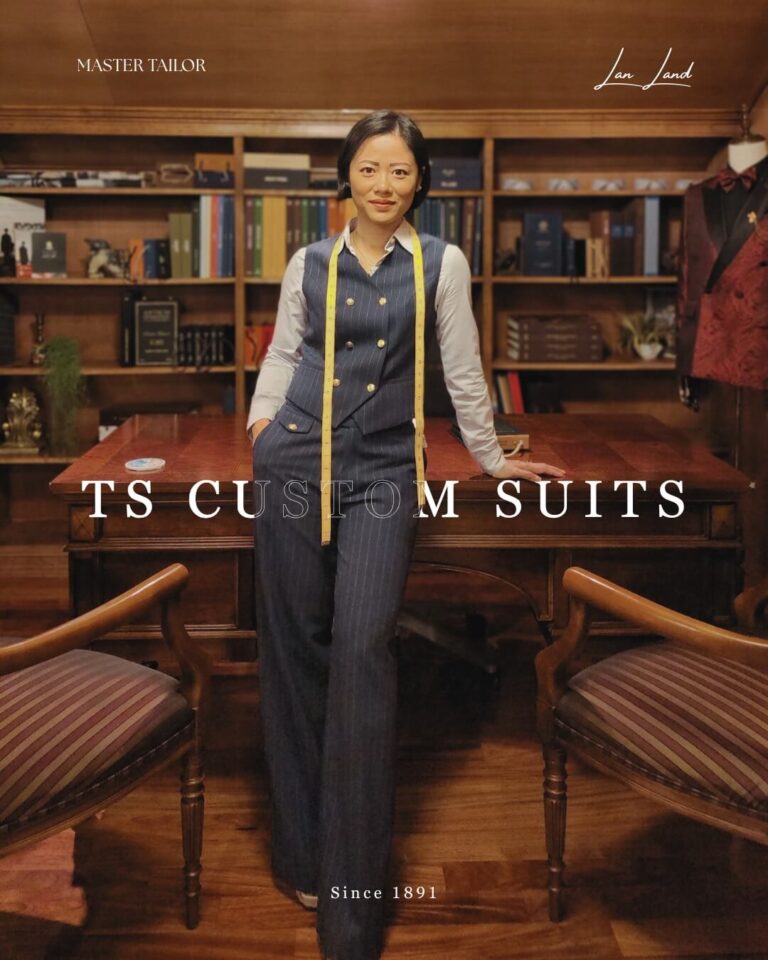
Written by Lan, eighth-generation master tailor at TS Custom Suits. Last updated October 2026.
What Is a Bespoke Suit?
A bespoke suit is a suit built from a pattern drafted from scratch for one person’s body, rather than adjusted from an existing pattern. The cloth, construction, and details are chosen with the client, and the fit is refined before the garment is finished. That is the difference between bespoke and the two things it is most often confused with: off-the-rack suits, which are made to a standard size, and made-to-measure suits, which modify an existing pattern. If you want the side-by-side comparison, our Chronicle guide to bespoke vs. made-to-measure covers it in detail.
Inside the Fitting: Why We Take About 40 Measurements
Most men expect a tailor to measure chest, waist, sleeve, and inseam. Those matter, but they describe a size, not a person. A pattern for you needs to capture how your body is actually built and how you carry it. At TS Custom Suits we take roughly 40 measurements, and some of the ones that change a suit most are the ones people don’t expect:
- Shoulder slope. Shoulders are rarely level or symmetrical, and a jacket cut for an average slope will wrinkle or collapse on a real one. This is the hardest fit problem to alter after the fact.
- Each arm separately. Most people have one arm that sits slightly differently, so we measure both rather than assuming they match.
- Posture and back slope. A forward shoulder or an upright carriage changes how the jacket hangs from the collar down. This is why a suit can fit across the chest and still pull at the back.
- The back-to-leg ratio. The proportion between your torso and legs decides where a jacket should end and how a trouser should sit.
- Your shoes and your break. We ask which shoes you’ll wear and how you like the trouser to fall over them, because the hem is judged against the shoe. Our Chronicle guide to trouser breaks explains the options.
- Which wrist your watch is on. It is a small detail, but it affects how the cuff and sleeve should sit on that arm.
These measurements become your pattern, and we keep it on file. Every future garment starts from the fit we already perfected rather than from zero. This is also why athletes, men with broad shoulders and a trim waist, and tall or big builds tend to feel the biggest difference. Their bodies were never the average that standard patterns assume.
Where the Method Comes From
Our family has been making suits since 1891. The first workshop was in Phu Xuyen, near Hanoi, and it was built on a combination of two traditions. When French master tailors arrived in the colonial era, our family spent years learning their structured construction: floating canvas, hand-padded lapels, and mathematically precise pattern drafting. We combined that with a Vietnamese understanding of how cloth should drape and move on a living body.
That craft has passed through eight generations and now lives in Jacksonville, at our private atelier inside Hidden Hills Golf and Country Club. You can read the longer story on our heritage page and in our overview of why clients choose TS Custom Suits for bespoke tailoring in Florida. The reason it matters for you is practical: we don’t draft a pattern by looking up a formula. We draft it the way it was taught to us, and then we fit it to the person standing in front of us.
The Cloth, the Canvas, and the Hand Work
Once the pattern is set, the suit takes shape in three decisions:
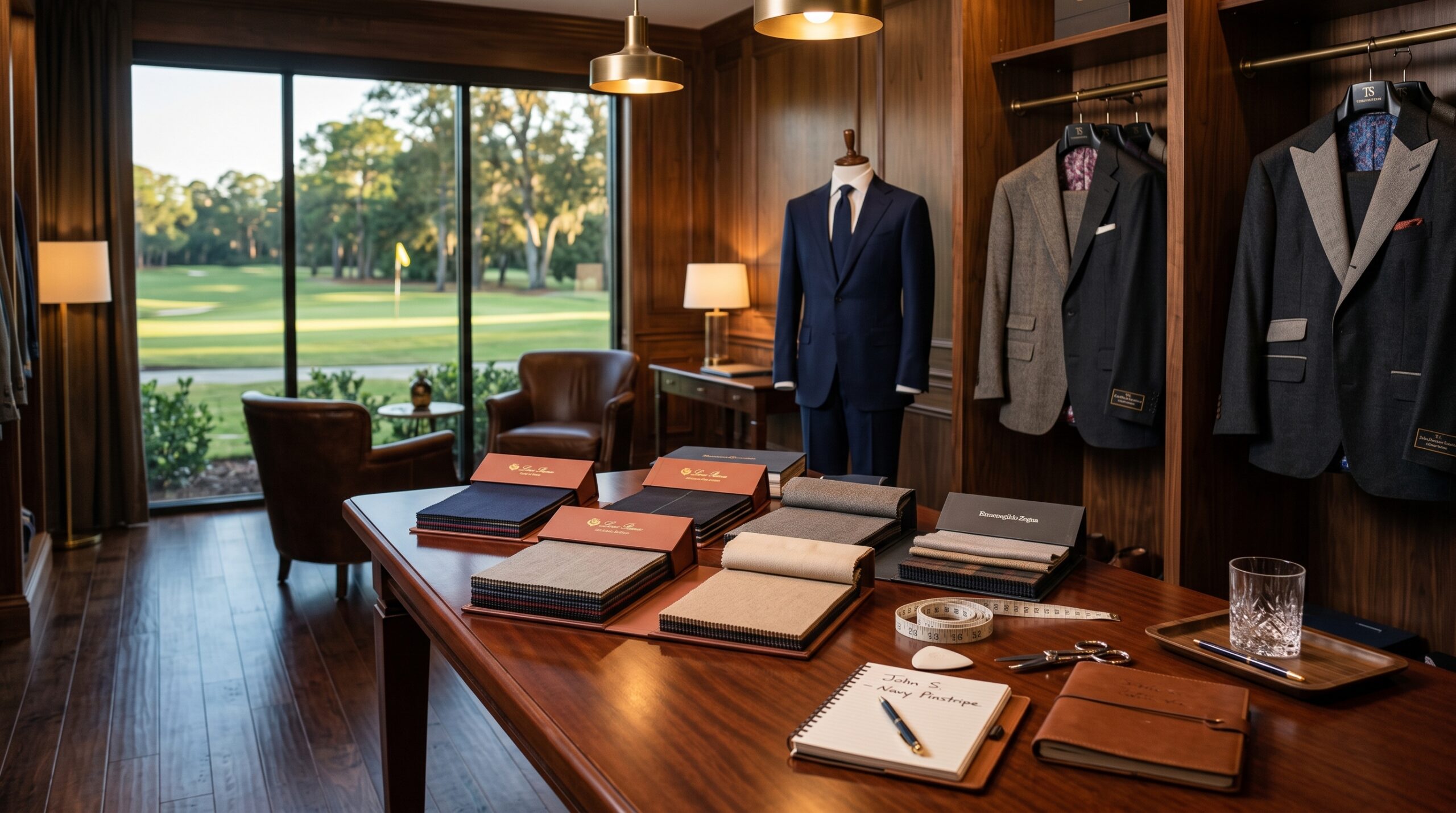
Cloth. We work with fabrics from some of the world’s most respected mills, including Loro Piana, Ermenegildo Zegna, Scabal, and Dormeuil. The most expensive cloth is not always the right one. A groom marrying outdoors in August needs something different from an executive who wears a suit four days a week. Part of the consultation is steering you toward the cloth that fits your life and budget, not the most prestigious one in the book.
Canvas. Inside the jacket is a layer of canvas that is shaped by hand rather than glued to the cloth. This is what lets a jacket move with you, gives the lapel its rolled shape, and lets the suit settle to your body over years of wear. We explain how to recognize it in our guide to full canvas construction.
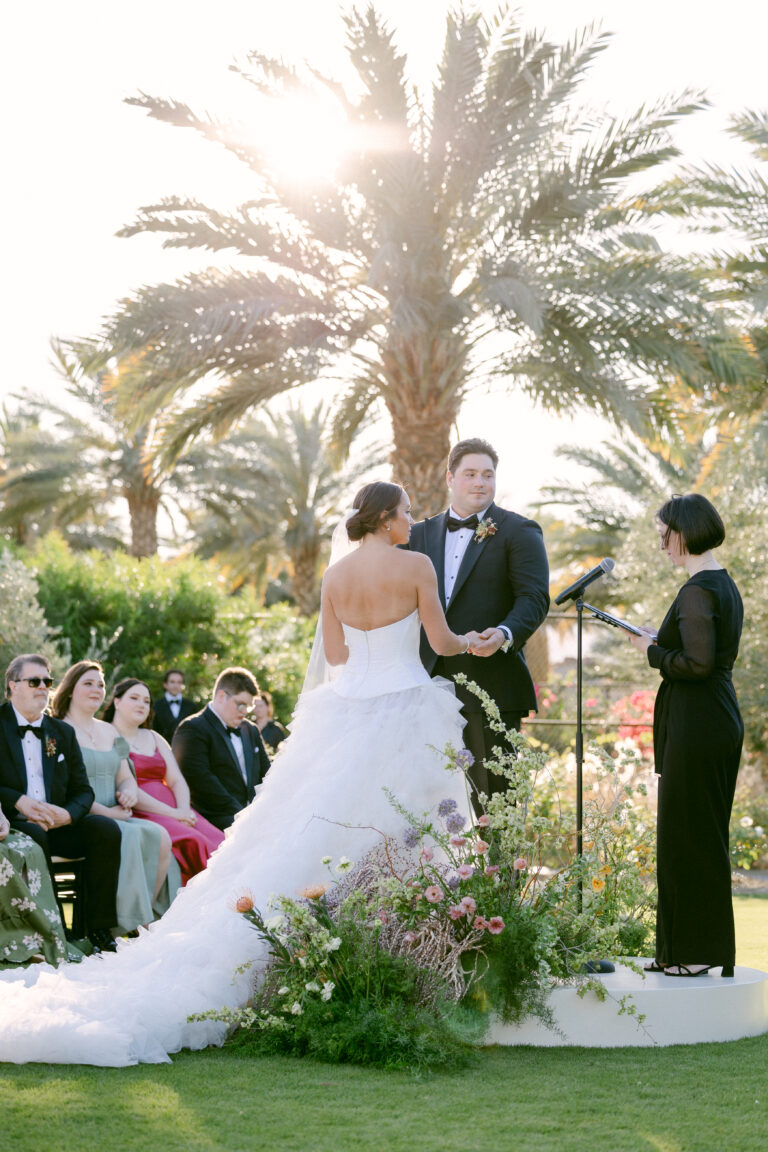
The interior. The lining is where a suit becomes personal. We are the number one online retailer of custom suit linings, and grooms often choose a lining printed with a handwritten note, wedding vows, or a collage of photographs. The jacket stays composed on the outside, and the story is inside. For a wedding, we can also photograph the bride’s dress and the wedding colors at your consultation, so the cloth and style you choose complement hers and the overall theme. See our Wedding Suits & Tuxedos page for how that works.
What Clients Say After the Fitting
The measurements are only the means. What clients notice afterward is the result:
“Perfection is almost an understatement. I have had suits from Brooks Brothers made to measure and a custom suit elsewhere. Those suits may as well have been from the clearance rack in comparison to Lan’s work.”
— Scott Kowalski, Google review
“She not only took basic measurements but really sought to understand the angle of my arm, my disproportionalities, etc., and delivered a suit that fit very well the first go.”
— Chreston Allen, Google review
You can read more in our collection of client reviews.
How Long It Takes and What It Costs
Most of our garments are handcrafted over three to four weeks after your consultation, followed by a final fitting to refine the result. For a wedding or a major event, we recommend starting well before that, so there is room for fabric selection, construction, and adjustments.
On cost, our published starting price for a custom suit is $1,200, and tuxedos start at $1,300. Final pricing depends mostly on the cloth and the level of detail. Our Bespoke Suit Package is our full guided commission for a suit or tuxedo, built around a one-on-one video consultation with live measurement coaching, which is how clients outside Jacksonville get the same fitting we give in person.
Is a Bespoke Suit Right for You?
Honestly, not every suit needs to be bespoke. A well-altered off-the-rack suit can be the right call for a single low-stakes event or if your build sits close to a standard size. Bespoke is most worth it when:
- Off-the-rack suits have never fit your shoulders, chest, or proportions properly.
- The suit is for something that matters: a wedding, a career-defining role, or a wardrobe you intend to keep.
- You want to choose the cloth, details, and lining rather than accept what’s on a rack.
- You plan to wear it often enough that cost per wear matters.
If you’re building a professional wardrobe, our guide to custom suits for work in Jacksonville covers how to prioritize pieces. If you’re planning a wedding, see our guide to bespoke wedding suits and tuxedos.
What to Bring to Your First Fitting
- The dress shoes you expect to wear with the suit, so the hem is set correctly.
- A shirt similar to what you’ll wear, so the collar and cuff are judged properly.
- Your watch, if you wear one.
- For a wedding: photos of the bride’s dress and the wedding’s colors and theme.
- Any inspiration photos, even rough ones. They help us understand what you’re picturing.
Frequently Asked Questions
“Custom” is a broad term that covers anything made to order. “Bespoke” specifically means a pattern drafted from scratch for your body. Made-to-measure alters an existing pattern. We explain the difference in our bespoke vs. made-to-measure guide.
Most of our garments are ready about three to four weeks after your consultation, followed by a final fitting. Allow more time for weddings and large orders.
Yes. We guide clients through measurement over a one-on-one video consultation with live coaching, and we ship worldwide.
Yes. Your pattern stays on file, so future garments start from the fit we already perfected.
Our custom suits start at $1,200 and tuxedos at $1,300, with the final price depending on cloth and detail. The Bespoke Suit Package is our full guided commission.
Book a Consultation
The best way to understand what bespoke means is to sit through a fitting. Book your private consultation at our Jacksonville atelier, or start from anywhere over video. You can also explore the full TS Custom Suits experience.
TS Custom Suits
Hidden Hills Golf & Country Club
12653 Mission Hills Cir N, Jacksonville, FL
904-206-7170