Holiday Party, Black Tie & New Year’s Eve Attire: A Jacksonville Groom… and Guest’s Guide
Between the first office holiday party and the last champagne toast of New Year’s Eve, most men will attend somewhere between three and six formal events in a six-week stretch. A Christmas party. A client gala. A New Year’s Eve dinner. Maybe a white-tie affair thrown in for good measure. Each one carries its own dress code, and each one is a chance to either blend into the room or be remembered for the right reasons.
The problem is timing. Custom tailoring takes weeks, not days, and by the time most men start thinking about what to wear, the calendar has already closed the window for anything but a rush job. This guide breaks down exactly what to wear for every kind of end-of-year event — and why the smart move is booking your fitting now, through October, not in the panicked scramble of late November.
What Should You Wear to a Holiday or Black-Tie Event?
For a company holiday party or casual Christmas gathering, a well-fitted dark suit in a rich seasonal fabric — velvet, flannel, or a deep jewel tone — strikes the right balance of festive and professional. For a formal holiday gala or black-tie New Year’s Eve event, a tuxedo in black, midnight blue, or burgundy velvet is the standard, paired with a bow tie, formal shirt, and polished shoes. White tie, reserved for the most formal occasions, requires a black tailcoat, matching trousers, a white pique waistcoat, white bow tie, and wing-collar shirt. Whichever event is on your calendar, book your consultation by October to ensure your garment is ready well before the season’s first invitation.
The Holiday Office Party: Festive, Not Flashy
A company holiday party sits in an interesting middle ground. It’s more festive than a Tuesday client meeting, but it’s still a professional setting where colleagues, executives, and clients are forming impressions that outlast the punch bowl. The goal is a suit that feels like a celebration without looking like a costume.
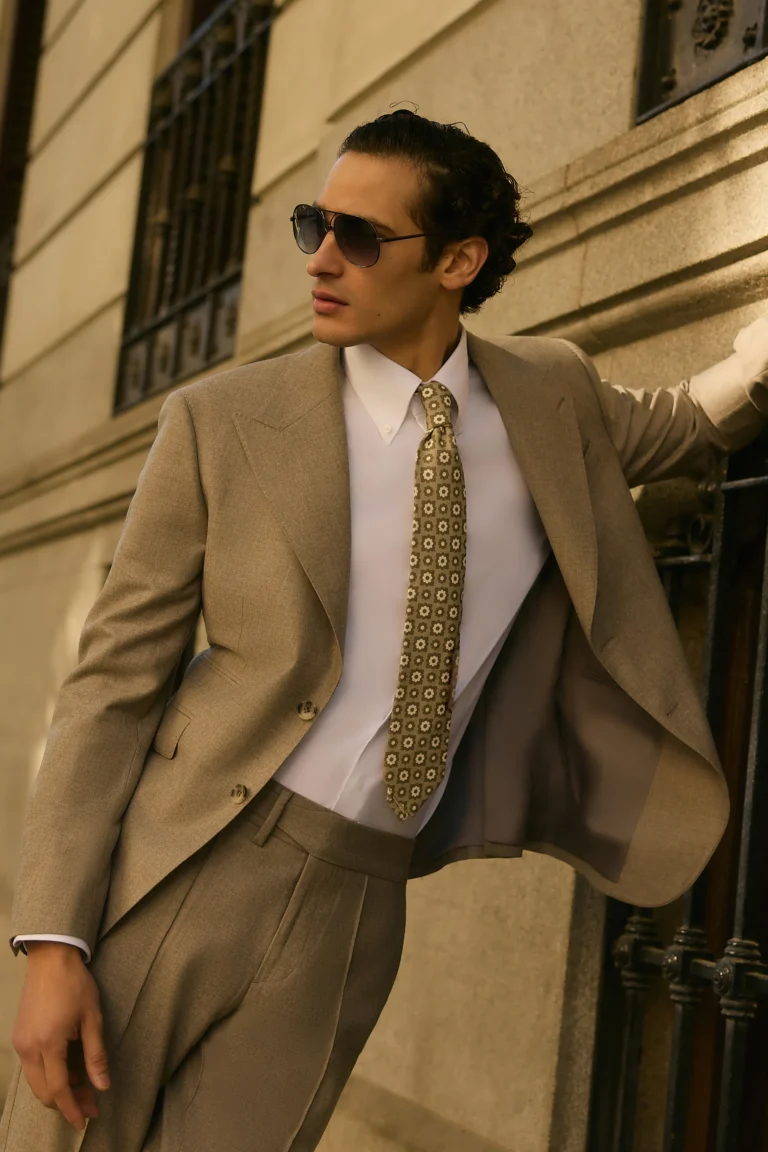
This is where rich seasonal color and texture do the work that a loud pattern shouldn’t. A deep hunter green, burgundy, or midnight navy suit reads as intentional and festive without crossing into novelty. Velvet and flannel both carry more visual depth than a standard year-round wool, which is exactly the kind of detail that makes a holiday-party suit feel occasion-specific rather than recycled from the office rotation. Browse our Tuxedo Collection for pieces built specifically for this kind of evening formality.
Accessories are where you can have the most fun with the least risk. A patterned silk tie in a seasonal color, a velvet bow tie, or a jewel-toned pocket square all signal “holiday” without requiring you to wear an actual reindeer. Keep the rest of the outfit disciplined — polished shoes, a crisp shirt, no novelty cufflinks — and let one or two details carry the festive note.
Black Tie: The Standard for Formal Galas and New Year’s Eve
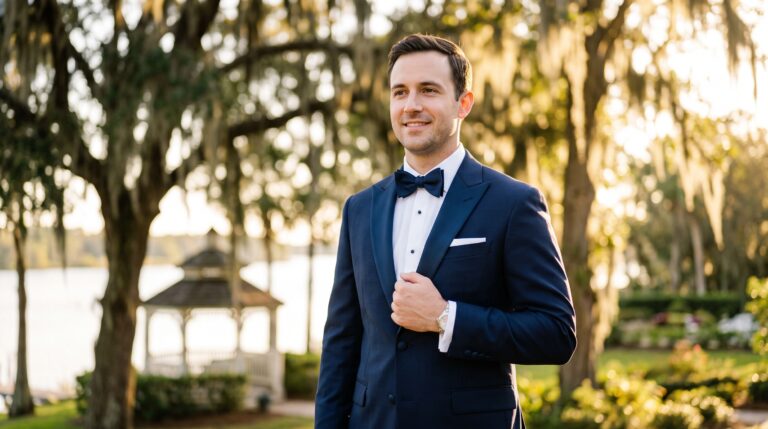
When an invitation specifies black tie — for a charity gala, a formal New Year’s Eve celebration, or an upscale holiday event — a dark suit is not an acceptable substitute, no matter how good it looks. Black tie calls for a tuxedo: satin or grosgrain lapels, a formal trouser stripe, a white dress shirt, and a black bow tie, ideally self-tied.
Classic black remains the most traditional choice, but for New Year’s Eve specifically, this is where you can lean into something with more presence. A burgundy velvet tuxedo, like The Crimson Sovereign, catches candlelight and camera flashes in a way flat black never will — it’s a genuine statement piece for the one night of the year built entirely around making an entrance. Midnight blue is a more restrained alternative that still reads richer than black under evening lighting.
Whatever the color, the details matter: a proper shawl or peak lapel, a formal shirt with the correct collar, and studs or cufflinks that complement rather than compete with the jacket. If you’re new to the full breakdown of what black tie actually requires — cummerbund versus waistcoat, patent leather versus polished calfskin — our guide to why TS Custom Suits is Florida’s top choice for bespoke tailoring covers the construction and craft standards behind every formal garment we build.
White Tie: The Rarest and Most Formal Standard
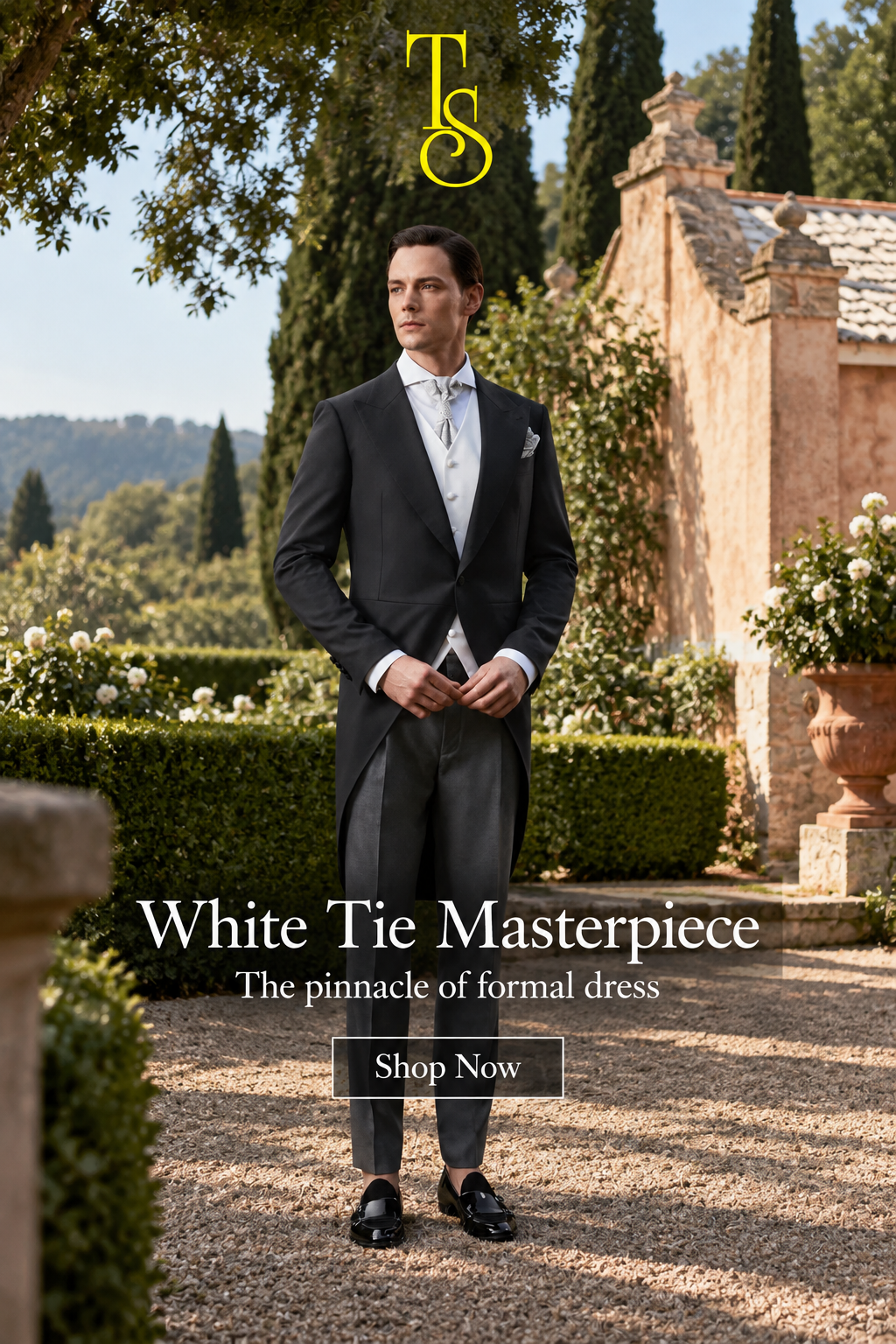
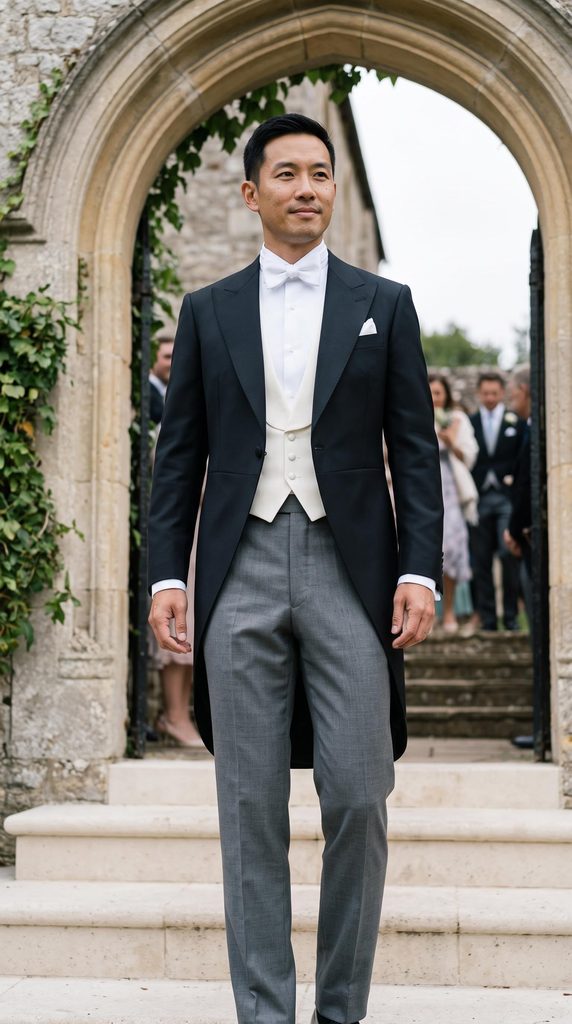
White tie is the most formal dress code that exists in modern menswear, and it appears rarely — a few of the most prestigious galas, certain diplomatic events, or exceptionally formal weddings. If you’ve received a white-tie invitation, the dress code is not flexible, and a black-tie tuxedo will not suffice.
White tie calls for a black tailcoat with matching trousers featuring a satin stripe, a white pique waistcoat, a detachable wing-collar shirt, a white bow tie, and black patent leather shoes. Every element is precise and traditional by design; this is a dress code built on exact conformity rather than personal interpretation. Because white-tie garments are commissioned far less frequently than tuxedos, and because the construction is more specialized, this is exactly the kind of event where starting early — months, not weeks, ahead — makes the difference between a garment that fits the occasion’s gravity and one assembled at the last minute.
Do You Have Your New Year’s Eve Attire Ready?
New Year’s Eve deserves its own category, because unlike a company party or even most galas, the dress code is often self-determined. You decide how formal the night becomes, which means you also decide how memorable you’ll look in every photo taken between the countdown and the first toast of the new year.
This is the one night where a bolder choice is genuinely justified. A velvet dinner jacket, a jewel-toned tuxedo, or a personalized lining hidden beneath a classic black exterior all let you mark the occasion without abandoning formality. If the evening carries personal significance — an engagement planned at midnight, a milestone anniversary, a night you’ll want to remember in detail — a custom interior lining can hold that memory in a way no rented tuxedo ever could.
Whatever direction you choose, the same rule applies as every other event on this list: the tailoring needs lead time. A New Year’s Eve suit ordered in mid-December is a suit under real pressure to arrive, fit, and be altered in a fraction of the runway a proper commission deserves.
Why Now Through October Is the Time to Book
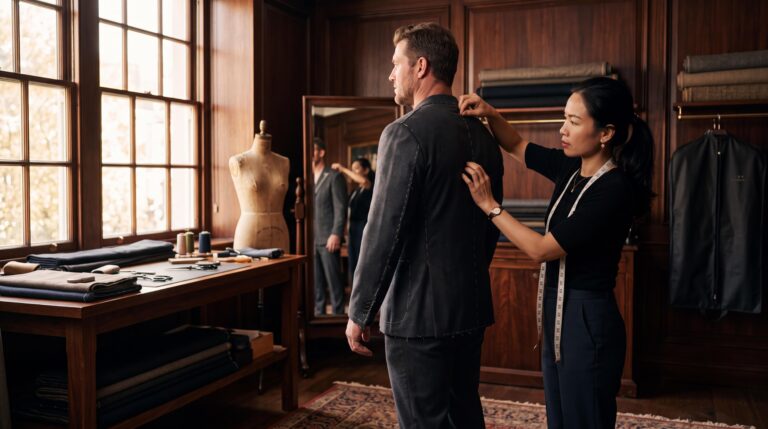
Every garment on this list — a holiday party suit, a black-tie tuxedo, a white-tie tailcoat, a New Year’s Eve statement piece — is built to order, not pulled from a rack. That means fabric selection, a full measurement session, three to four weeks of handcrafting, and a final fitting all need to happen before the invitation’s date arrives, not the week before it.
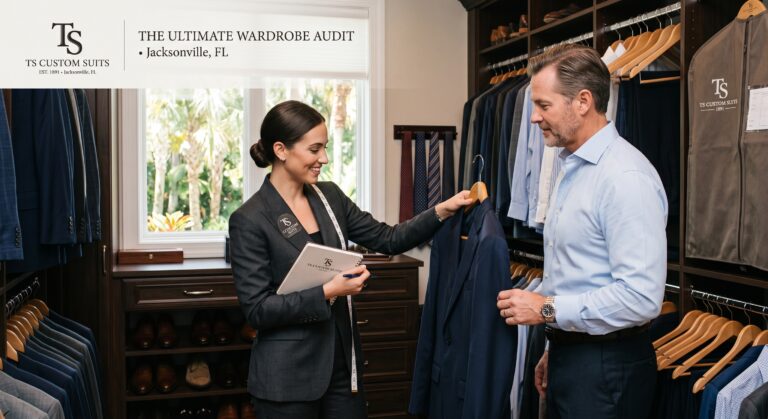
Work backward from your first event of the season. If your company holiday party lands in early December, and you want time for a proper fitting and any final adjustments, your consultation needs to happen in October at the latest. If you’re building toward New Year’s Eve as well, ordering now means one commission can be planned thoughtfully instead of two rushed ones back to back. This is true whether you’re commissioning one new piece or refreshing several — our guide to a wardrobe audit is a useful starting point if you’re not sure exactly what the season ahead calls for.
October is not an arbitrary deadline. It is the point at which every subsequent step — fabric, construction, fitting, alterations — still has room to happen without compressing into a stressful final week. Booking now means walking into your first holiday event of the season in a garment that was actually finished, not finished just in time.
Frequently Asked Questions
A well-fitted suit in a rich seasonal color or fabric — deep green, burgundy, navy, velvet, or flannel — strikes the right tone: festive enough for the occasion, professional enough for colleagues and clients. Add one seasonal accessory, like a patterned tie or velvet bow tie, rather than head-to-toe holiday styling.
Black tie calls for a tuxedo — dinner jacket, formal trousers, bow tie, and a dress shirt. White tie is more formal and rare, requiring a black tailcoat, matching trousers with a satin stripe, a white pique waistcoat, a wing-collar shirt, and a white bow tie. If your invitation says white tie, a black-tie tuxedo is not an acceptable substitute.
New Year’s Eve dress codes are often self-determined, which makes it a good occasion for a bolder formal choice — a velvet dinner jacket, a jewel-toned tuxedo, or a personalized lining beneath a classic exterior. Match the formality to your specific event, but lean into the occasion since it’s one of the few nights built entirely around celebration.
Now through October, for any event landing in November through early January. Custom garments take three to four weeks to construct after your consultation, plus time for a final fitting and any adjustments. Booking in October leaves comfortable room before your first holiday event; waiting until late November compresses everything into a rush.
Often, yes — most garments can still be completed in three to four weeks. But the closer you are to your event, the less room there is for fabric backorders, fitting adjustments, or any unexpected delay. If your event is approaching, reach out as soon as possible so we can plan a realistic timeline together.
Get Ahead of the Season
The holidays move fast once they start. Between office parties, galas, and New Year’s Eve, most men don’t have a single free weekend from Thanksgiving onward — which is exactly why the fitting has to happen before that stretch begins, not during it.
Whether you need a festive suit for the office party, a proper tuxedo for a black-tie gala, a white-tie tailcoat for a formal invitation, or something with real presence for New Year’s Eve, now through October is the window to make it happen without compromise. Book your private consultation — in our Jacksonville showroom or virtually from anywhere — or explore the full TS Custom Suits experience before the season fills up.